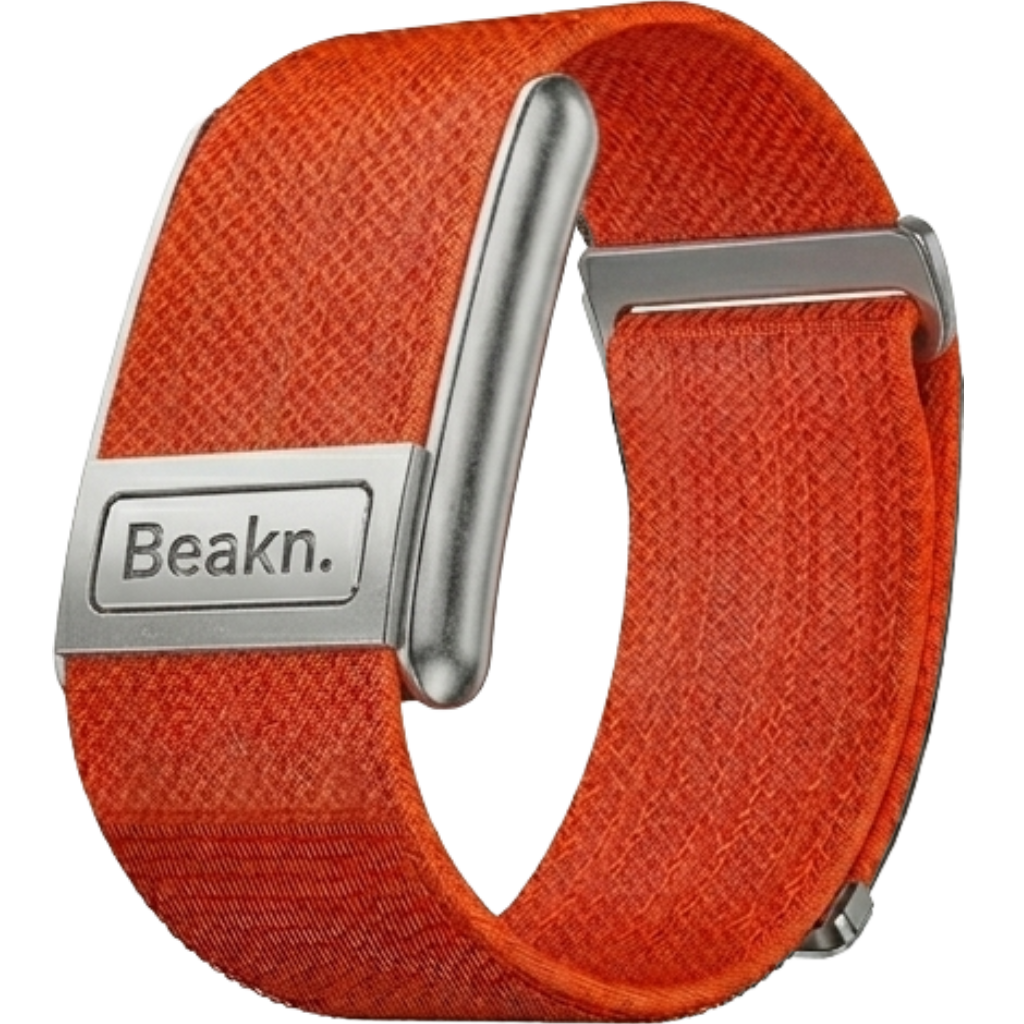
The opposite of a smartwatch.
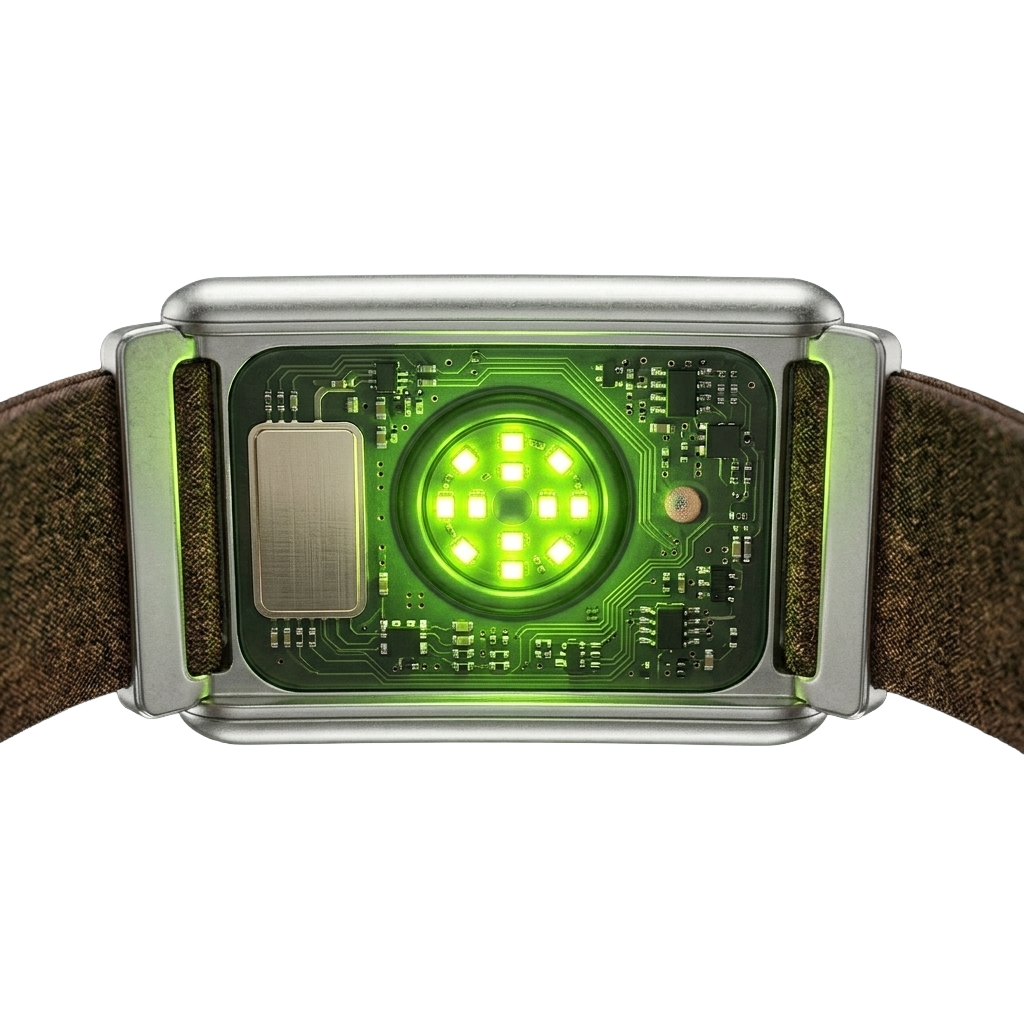
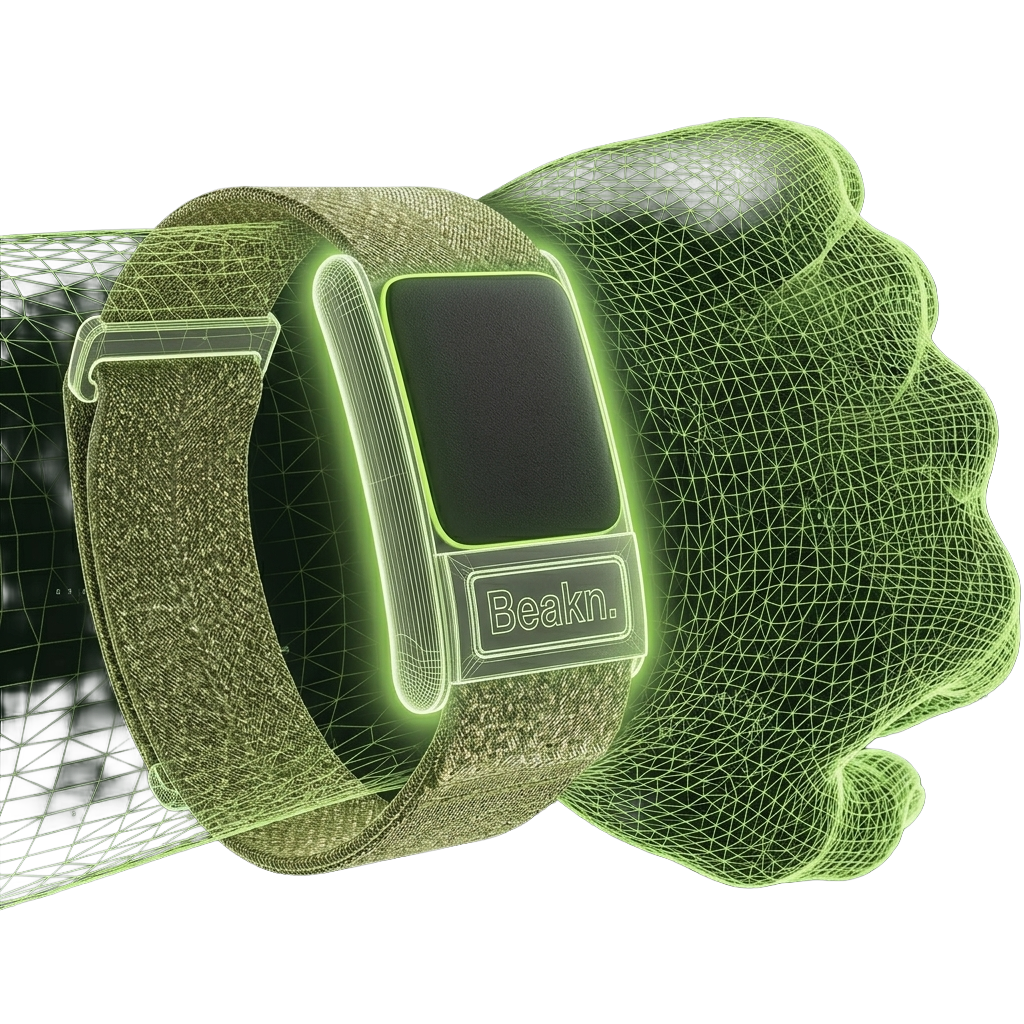
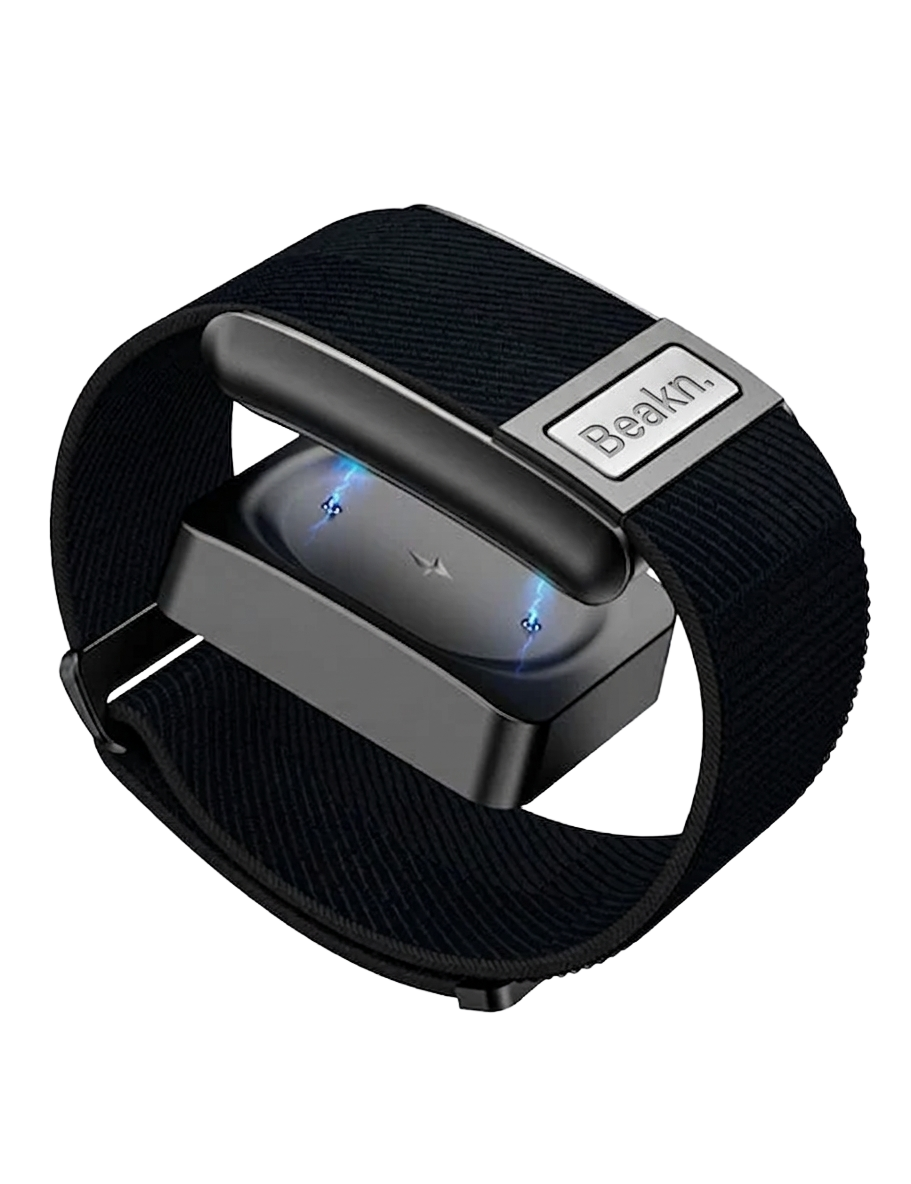
No screen. No haptic buzz. No glanceable face. Beakn Band is a soft woven elastic strap with a single metal lozenge tucked against your inner wrist — and that's it. You forget you're wearing it. That's the point.
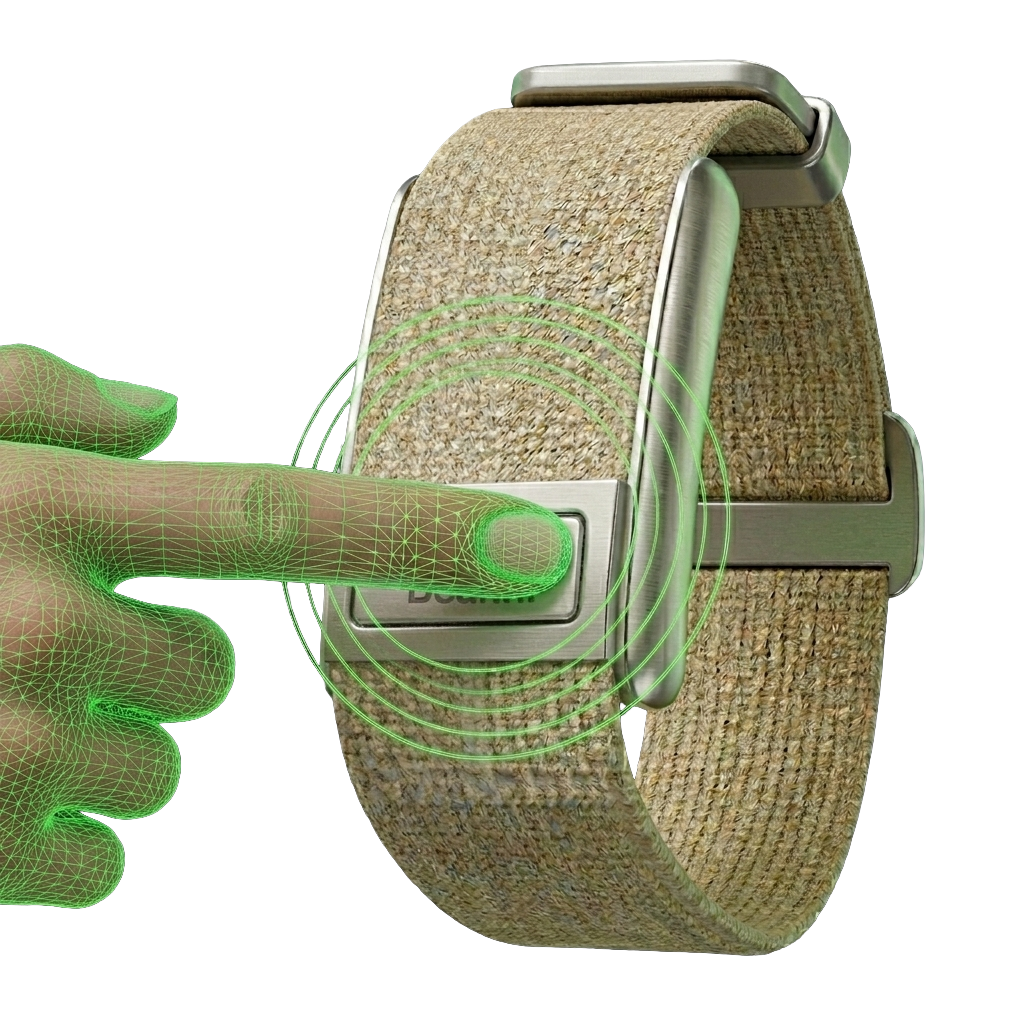
Single‑lead ECG. Touch and go.
Touch the metal pad with two fingers from your other hand. You complete the circuit. 30 seconds later the AI has screened your rhythm for atrial fibrillation, premature beats, and 30+ anomalies — the same readings cardiology offices charge ₹200 for.
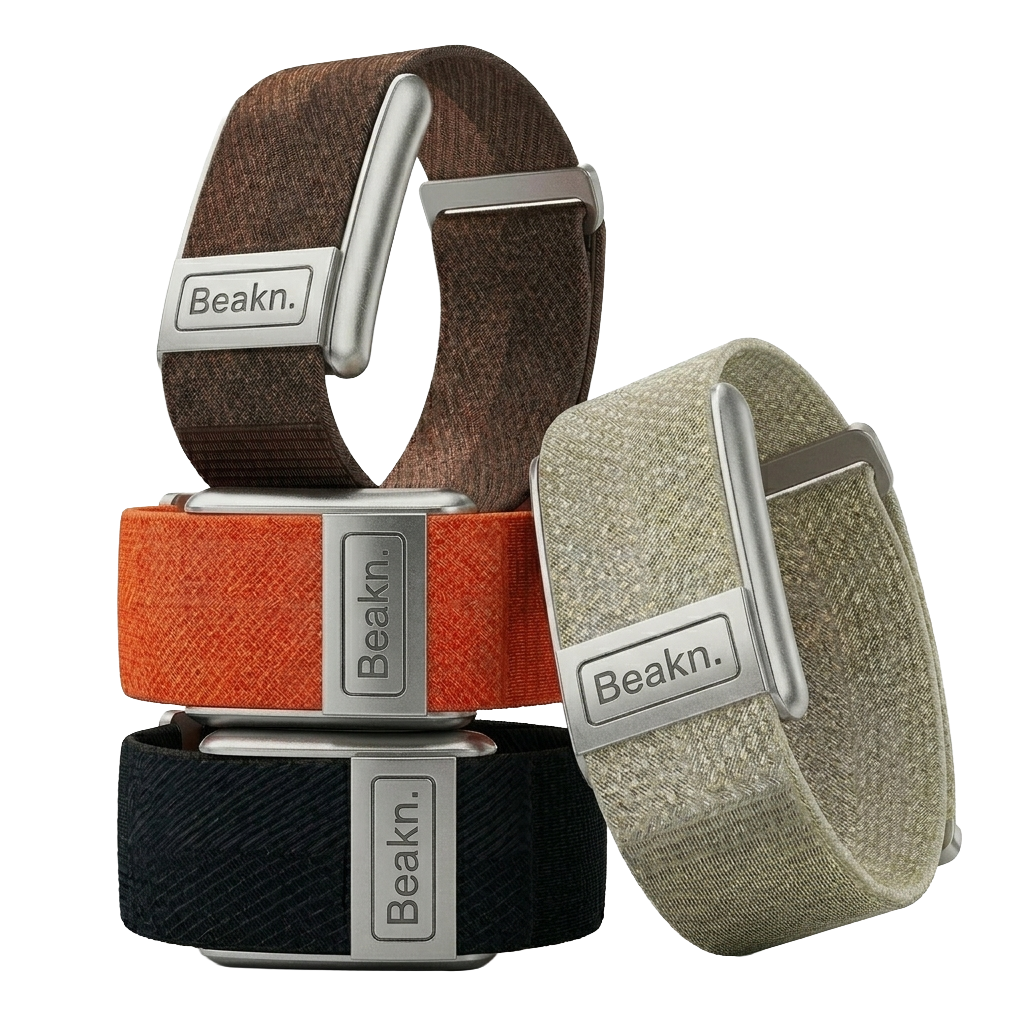
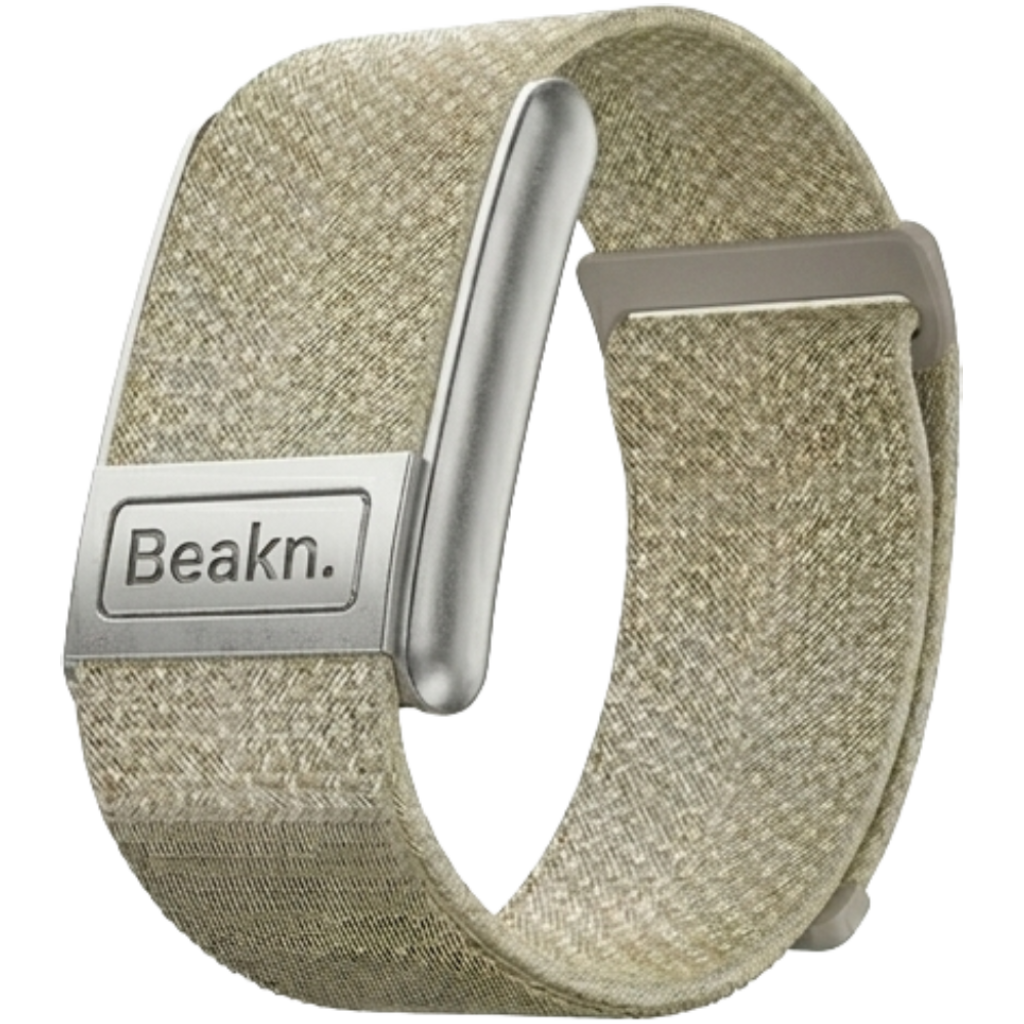
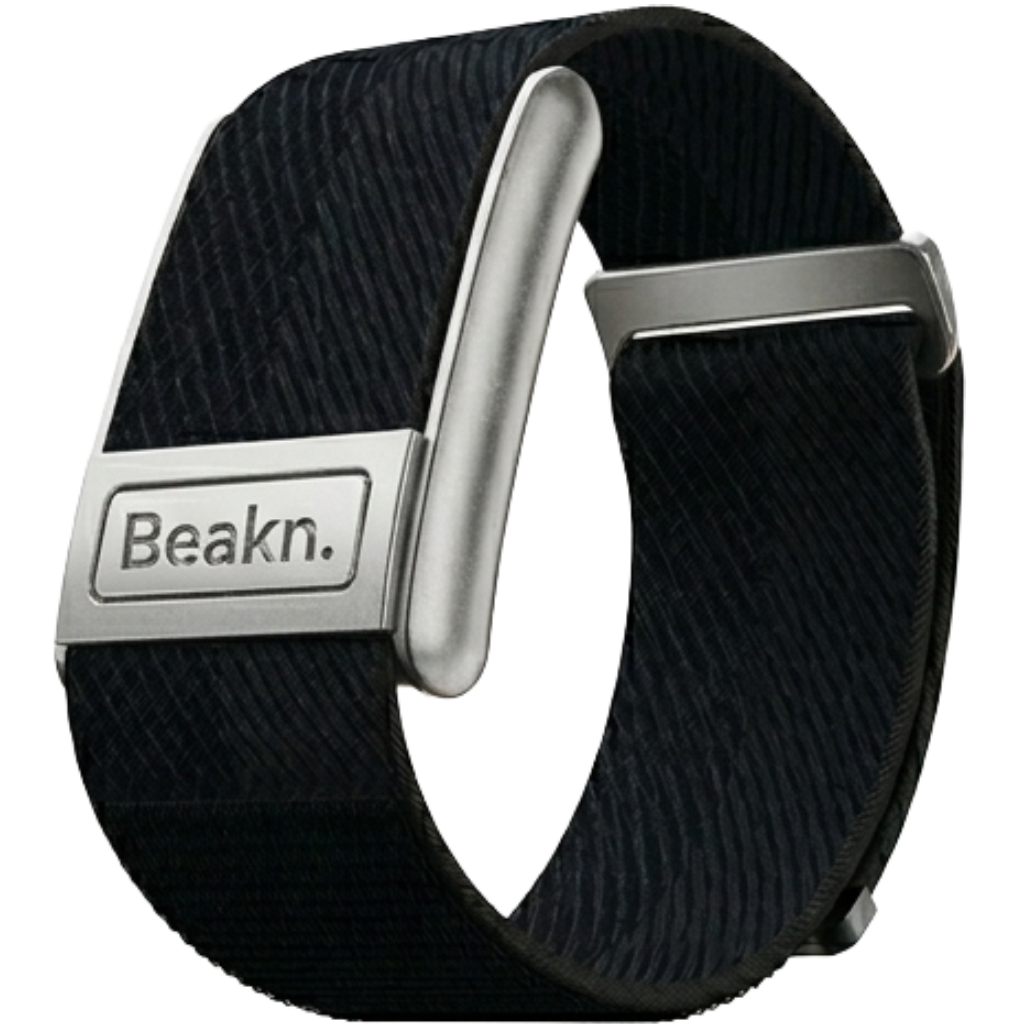
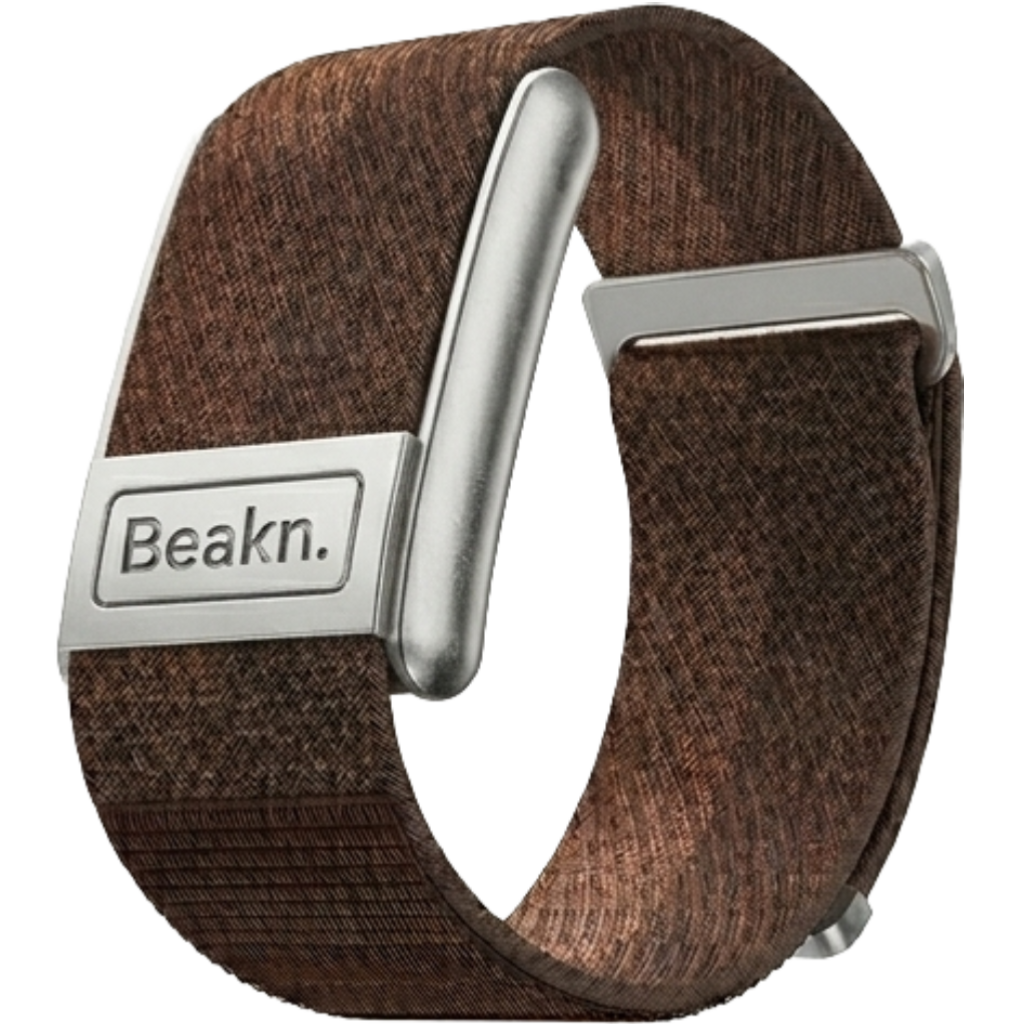
Four colorways. Soft.
Sand. Onyx. Cocoa. Ember. Woven elastic nylon with no clasp — pull it on like a hair tie, forget about it. Pick your favourite color.
Seven days. One charge.
No always‑on AMOLED to drain. No notifications to render. Just sensors and a radio. Battery lasts a full week of continuous wear — fifteen minutes on the magnetic puck buys you a day.
Sleep that finally makes sense.
Beakn Band reads your wrist through the night — tracking light, deep, and REM stages, plus awake periods, using heart rate and movement together. Wake up to a sleep score and a plain-English breakdown of what your body actually recovered from.
Every vital. All day, silently.
Heart rate, HRV, SpO₂, and skin temperature — sampled continuously in the background, around the clock. No taps, no prompts. The optical array reads your pulse wave every few seconds and flags anything worth knowing before you notice it yourself.
Built for how you actually move.
Running, cycling, swimming, yoga, HIIT — Beakn Band tracks them all, indoors and out. It logs steps, distance, active calories, and continuous heart rate through every session. It also scores exercise intensity and cumulative training load, so you know when to push and when to hold back.
Your aerobic ceiling, measured.
VO₂max is the single best predictor of long-term cardiovascular health — better than resting heart rate, better than weight. Beakn Band estimates yours continuously from your activity and cardiac data, then tracks how it shifts over weeks and months as your fitness changes.
Stress detected. Not just reported.
Most apps ask how stressed you are. Beakn Band reads it directly — HRV drops when your nervous system is under load, and the AI catches the pattern before you do. It tracks your stress curve through the day, surfaces recovery windows, and tells you when your body has actually unwound.
A medical signal,
in something you forget you're wearing.
What it actually measures.